

Europe’s autumn of anger: protests spread from France to Italy
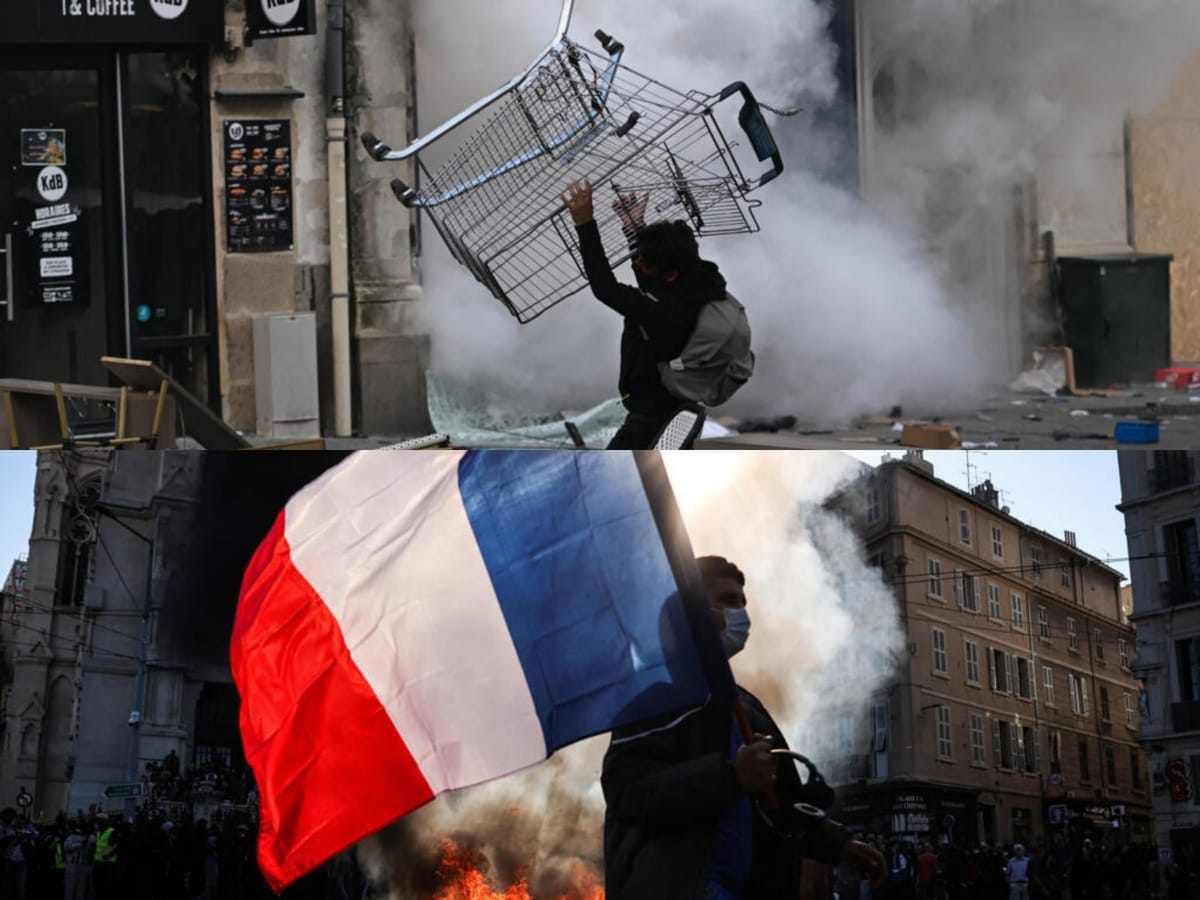
What happened: Hundreds of thousands of people marched across France, Belgium, Italy and Portugal on 17 October, and several cities saw the worst rioting in years.
Why it matters: The protests started over schools but are now about prices, housing and trust in governments, in countries already short of money and close to elections.
What's next: New marches are called for Saturday 24 October in France, where the government has promised a massive police presence.
It started in French high schools. Since mid September, students have been blocking school gates to protest against overcrowded classrooms and missing teachers. Five weeks later, the anger has spread far beyond the classroom and across borders, turning into the largest wave of unrest Europe has seen in years.
France: the centre of the storm
On Saturday 17 October, around 550,000 people marched across France according to the Interior Ministry, about 110,000 of them in Paris. Students were joined by teachers, parents, trade unions, farmers, retirees and the Yellow Vests movement, all with one message: life has become too expensive and public services are falling apart.
Most marches were peaceful during the day. At night, many turned violent. Masked groups set fire to the town hall in Limoges, which was more than 140 years old, and broke into the city halls of Marseille and Lille. Shops were looted in Paris and Marseille. One police officer and one protester died, and Prime Minister Sébastien Lecornu said 1,200 people were arrested on that day alone.
By Monday the Interior Minister, Laurent Nuñez, counted 2,513 people taken into custody since the protests began. Human Rights Watch has also reported serious injuries to teenagers from police grenades and tear gas canisters, and protesters accuse the police of excessive force.
President Emmanuel Macron promised that those who attacked public buildings would be prosecuted. The government responded with night curfews in Paris, Lyon, Bordeaux, Nice, Lille and other cities, some of them only for minors, and a support fund for damaged businesses.
Belgium: a fight over school fees
In French speaking Belgium, the trigger is concrete: university fees for most students are rising from 835 to 1,194 euros a year, on top of budget cuts in schools. Students in Liège started protesting on 1 October, and the movement spread to Mons, Charleroi and Brussels. On 17 October, police arrested 195 people in Brussels and Liège. The Interior Minister blamed "organised violence" by groups that joined the student marches.
Italy: "No Meloni Day"
In Italy, students marched in more than ten cities on 16 October under the slogan "No Meloni Day", from Rome and Milan to Florence, Genoa and Cagliari. The next two days brought serious clashes in Milan, Turin and Bologna, with shops damaged and dozens detained. Protesters point to rising fuel prices, low wages, rents and the state of schools and hospitals. Prime Minister Giorgia Meloni condemned the violence, and the government has since announced new measures against violent protests.
Portugal, Spain, Greece and beyond
In Lisbon, the CGTP trade union led thousands through the city centre, and activists set up around 40 tents on Rossio square to protest against high rents and low wages. Tent camps against unaffordable housing have also appeared in Spain. In Athens, students have gathered in Syntagma Square since 13 October over the cost of student housing. Outside the EU, Albania has seen more than a week of anti government protests in Tirana, joined by students.
Why now
The protests are not coordinated. Each country has its own trigger. But the reasons behind them are the same:
- Prices. Energy costs have pushed inflation up again this autumn, and fuel is a daily pain for workers and families.
- Housing. Rents in big cities have grown much faster than wages, and young people feel locked out.
- Public services. Schools, hospitals and transport are short of staff and money.
- Empty treasuries. France and Belgium are running deficits of about 5% of their economy, and French borrowing costs are at their highest in decades. Governments have little room to spend their way out.
- Elections ahead. France votes for a new president in spring 2027 and Italy also faces elections next year, so every party is reading the streets.
What comes next
All eyes are on Saturday 24 October. France's main student union, UNEF, has called new marches and says it will not stop until its demands are met. The CGT union says it will join and is calling for peaceful protests. The government has promised a massive security presence and plans to use the military to help keep order.
Brussels may be next. European farmers' organisations are discussing large protests in November or December over the next EU budget and farm subsidies, timed with meetings of EU leaders.
The question for Europe's governments is no longer whether people are angry. It is whether they can answer that anger before the next weekend, and the next election.
Sources
- Al Jazeera: Tear gas and unrest as hundreds of thousands protest in France
https://www.aljazeera.com/news/2026/10/17/france-wave-of-nationwide-protests - CNN: Macron vows to hold accountable those who sought to bring down the Republic
https://www.cnn.com/2026/10/17/europe/half-million-protesters-sweep-france-in-youth-unrest-latam-intl - Al Jazeera: Cost of living protests hit Belgium, Italy, Portugal and France
https://www.aljazeera.com/news/2026/10/17/cost-of-living-protests-hit-belgium-italy-portugal-and-france - ABC News: France protests cool after overnight curfews
https://abcnews.com/International/france-protests-cool-after-overnight-curfews-paris-major/story?id=137403836 - CNBC: France to deploy military as it braces for fresh unrest
https://www.cnbc.com/2026/10/20/france-protests-curfews-macron-gulf-trip.html - CNN: France promises massive police presence this weekend
https://www.cnn.com/2026/10/19/europe/france-protests-violence-wwk-intl-hnk - Al Jazeera: Why have France's school protests become a wider political crisis?
https://www.aljazeera.com/news/2026/10/18/why-have-frances-school-protests-become-a-wider-political-crisis - Al Jazeera: Over 100 arrested in Belgium student protests over education costs
https://www.aljazeera.com/news/2026/10/7/over-100-arrested-in-belgium-student-protests-over-education-costs - Anadolu Agency: 195 arrested as education protests turn violent in Belgium
https://aa.com.tr/en/europe/195-arrested-as-education-protests-turn-violent-in-belgium/4092597 - France 24: Italy braces for autumn of discontent as students protest
https://www.france24.com/en/live-news/20261016-italy-braces-for-autumn-of-discontent-as-students-protest - Al Jazeera: What are Italy's new measures against violent protests?
https://www.aljazeera.com/news/2026/10/21/what-are-italys-new-measures-against-violent-protests - OPB / NPR: From France to Albania, social unrest is setting Europe's streets ablaze
https://www.opb.org/article/2026/10/20/from-france-to-albania-social-unrest-is-setting-europe-s-streets-ablaze/ - Euronews: The economic pressures behind Europe's protests
https://www.euronews.com/2026/10/19/wages-vs-prices-the-economic-pressures-behind-europes-protests - Rapporteur: Farmers prepare new action in Brussels
https://www.rapporteur.com/news/farmers-prepare-new-action-in-brussels/